Health Intelligence (HQ) — Managing Your Body with Data
📌 This article is written for general informational purposes only. Results may vary depending on individual circumstances. If you experience any health concerns, please consult a qualified medical professional.
What Is Health Intelligence (HQ)?
Picture this: you wake up and check your smartwatch before getting out of bed, log your meals into a diet app after lunch, and glance at your sleep score before turning in for the night. Just a few years ago, people who did this were considered a bit obsessive. Now, heading into 2026, it's becoming the new normal.
This shift is exactly what Professor Kim Nan-do of Seoul National University's Department of Consumer Science captured in Trend Korea 2026 (Miraeuicreang, 2025), where he named Health Intelligence (HQ) as one of the year's ten defining trends. The logic follows naturally: after IQ (intelligence quotient) and EQ (emotional quotient) came HQ — your capacity to actively manage your own health.
It's more intuitive than it sounds. Health Intelligence refers to the ability to practice healthy habits in everyday life through one's own initiative. Rather than vaguely thinking "that's probably good for me," a person with high HQ looks at actual data — ingredient labels, biometric readings, sleep stages — and makes informed decisions. In short, health literacy is now a skill worth developing.
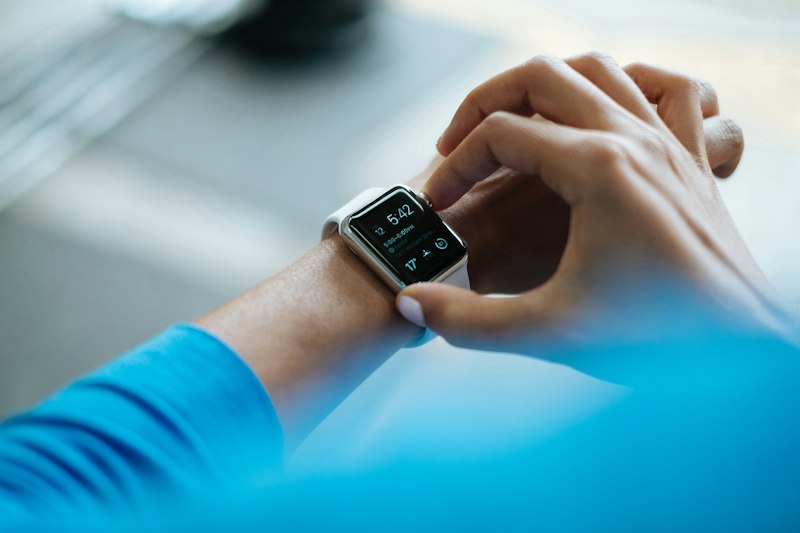
Before the pandemic, people who worked out regularly stood out. After it, people who don't exercise at all are starting to seem unusual. The cultural attitude toward health has fundamentally shifted. The HQ trend captures the next phase of that shift: moving beyond "working hard" on your health to working smart.
Why This Trend Is Taking Off Now
To understand the momentum, you need to look at the technology. The biggest change in wearable health devices in 2025 is their integration with AI. Where older smartwatches tracked steps and estimated calories, today's devices measure heart rate variability (HRV), blood oxygen levels, stress indices, and sleep stages — and AI systems then analyze all of that data to give you personalized feedback like, "You may benefit from a lighter workout today based on your recovery metrics."
One of the most significant developments is the mainstreaming of CGM (Continuous Glucose Monitors). A small sensor inserted just under the skin measures your blood glucose roughly every five minutes for one to two weeks, sending the data directly to your smartphone. Once exclusively for diabetics, CGMs are now being used by perfectly healthy people who simply want to understand how their diet affects their body. The global CGM market is projected to grow from roughly $5 billion in 2021 to over $30 billion by 2026.
The regulatory landscape is shifting too. Samsung's Galaxy Watch received approval from Korea's Ministry of Food and Drug Safety for its blood pressure monitoring feature, while Apple Watch has been cleared by the U.S. FDA for its ECG function as a medical device. We are now in an era where the watch on your wrist holds a medical certification.
"After the pandemic, not exercising has become the exception rather than the norm. The goal of health management has also shifted — from simply living longer, to sustaining quality of life over the long term."
— heypop.kr, Trend Korea 2026 Analysis
Practical Guide — What to Track with Wearables
If you own a smartwatch, you can start right now. The challenge is that most health apps throw a wall of numbers at you. Here's what actually matters.
① Heart Rate Trends — Look at HRV Too
Most smartwatches track heart rate, step count, sleep patterns, and calories as standard features. Of these, watching the trend in your resting heart rate matters most. Record it every morning right after waking up, and over time you'll establish a personal baseline. A sudden spike likely signals fatigue or the onset of illness. Devices like Garmin, Apple Watch, and the Oura Ring also track HRV — on days when it's low, scaling back to light movement is a smarter choice than pushing through a hard session.
② Sleep — Quality Over Quantity
Research has shown that the Oura smart ring can detect fluctuations in blood oxygen and heart rate during sleep that may signal early warning signs of sleep apnea. In your sleep app, focus on the ratio of Deep Sleep to REM sleep rather than total hours. Seven hours with very little deep sleep leaves your body underrecovered, regardless of what the clock says.
③ Blood Glucose — Find Your Dietary "Culprit" with a CGM
A coin-sized CGM sensor attached to your upper arm measures glucose approximately every five minutes for two weeks and sends the readings to your phone. Even without diabetes, wearing one for a short period reveals which foods send your blood sugar spiking — data that no food label can give you. A word of caution: consumer-grade CGMs are not equivalent to clinical medical devices in terms of precision. If readings concern you, speak with a doctor first.
④ Food Logging — Awareness Is the First Step
More people are building routines around checking their sleep data on a smartwatch and logging every meal — including sugar content and calories — in a diet app. It feels tedious at first, but within two to three weeks a clear picture emerges: how much sugar you're actually consuming, where your protein is falling short. Apps like Samsung Health, Noom, and MyFitnessPal make this approachable.

How Brands Are Adapting — HQ Marketing
As consumers evolve, so do companies. The food industry is moving away from shouting about ingredients and toward designing experiences that help consumers build healthy habits on their own — an approach now being called HQ marketing.
A standout example is Nongshim Kellogg's "Breakfast Challenge" campaign. By combining social media check-ins with reward incentives, the campaign was designed so that eating a protein-rich breakfast became a naturally repeated behavior — and 260,000 people participated. Instead of advertising that a product contains "X grams of protein," the brand embedded itself into a daily routine.
Raising Your HQ — What to Watch Out For
This trend isn't without its risks. When you become too fixated on data, health anxiety can quietly take over. Obsessing over a single number turns what should be empowering into a source of stress.
⚠️ A Warning from Professor Kim Nan-do: "As the number of people who over-invest in health and rely on misinformation grows, cultivating genuine health intelligence remains an important challenge." Data is a reference tool, not a diagnostic device.
While wearables measure basic metrics like heart rate and sleep stages with reasonable accuracy, more complex readings such as blood pressure and oxygen saturation have not yet reached the precision of certified medical equipment. A smartwatch reading is a signpost, not a diagnosis — and it should never replace a proper clinical examination.
True health intelligence isn't about chasing perfect numbers. It's about interpreting what the numbers suggest, then building a routine that's sustainable over the long haul. With AI making academic journals and medical research increasingly accessible to everyday people, consumer-level health intelligence will only keep rising. Riding that wave while developing the judgment to filter what's right for your own body — that is the real HQ.
Frequently Asked Questions
References
The following sources were used in researching and writing this article. Follow the links to read more.
📚 Trend Korea 2026, Kim Nan-do et al., Miraeuicreang (2025) — Library Catalogue 📰 "Beyond IQ and EQ — Now Comes HQ (Health Intelligence)" — Comedic.com / Nate News 📰 "Health Intelligence (HQ) Consumers Are Changing Food Industry Marketing" — Hankyung 🔗 "Consumer Trends in the Age of AI Transformation — 2026" — heypop.kr 📰 "Wearables Become the New Standard for Out-of-Hospital Health" — Digital Chosun Dizzo 🎓 "Wearable Devices: The Past and Future of Body Monitoring" — KAIST Times 📰 "How Wearables Are Reshaping Health Management and the Diabetes Market" — Pharm Edaily 📰 "Protein and Konjac Lead Daily Health Food Market Expansion in 2026" — EZY Economy 🌐 "Health Wearable Technology Trends in 2025" — MokoSmart ✍️ "Trend Korea 2026 Summary: Key Keywords at a Glance" — brunch.co.kr 🌐 "Wearable Devices in Healthcare: Benefits and Drawbacks" — ominext.com